
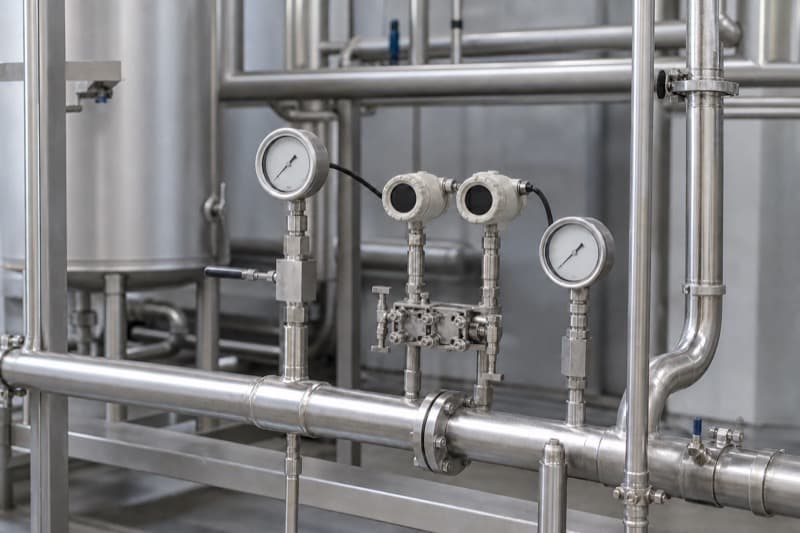
Temperature Instruments
Temperature instruments measure process heat using a thermocouple, an RTD, or a thermowell-protected sensor, chosen by required accuracy, temperature range, and process exposure rather than one universal sensor. NLS sources thermocouples and RTDs to IEC 60584 and IEC 60751 tolerance classes, with thermowells in stainless and alloy steel, for Saudi process, HVAC, and utility temperature monitoring.
A thermocouple and an RTD both measure temperature, but they work on different physics and that difference decides which one belongs on a given loop. A thermocouple is two dissimilar metal wires joined at one end, generating a small voltage that changes with temperature, simple, rugged, and capable of very high ranges. An RTD instead uses a resistance element, almost always platinum, whose electrical resistance rises predictably as temperature rises, giving tighter accuracy and better long-term stability but over a narrower range and at a higher unit cost. A thermowell sits between either sensor and the process fluid, a closed-end tube that lets the sensor be pulled and serviced without draining or depressurizing the line.
NLS sources both sensor families to their respective tolerance standards. Thermocouples are supplied to IEC 60584, which sets the tolerance classes and reference tables for common types (K, J, T, and others), each suited to a different temperature range and atmosphere. RTDs are supplied to IEC 60751, which defines the resistance-versus-temperature relationship and tolerance classes (Class A and Class B being the most common) for platinum resistance thermometers. Thermowells come in stainless steel for general corrosive service and higher-alloy steel for more aggressive process fluids or higher pressure ratings, sized by insertion length and process connection to match the vessel or pipe wall thickness.
On Saudi projects, temperature instruments show up on process heating and cooling loops, HVAC chilled and hot water system monitoring, boiler and steam plant temperature control, hospital sterilization and utility system monitoring, and general industrial process lines where a control system needs a continuous temperature signal rather than a spot check.
NLS quotes temperature instruments against the sensor type, temperature range, accuracy class, thermowell material and insertion length, and connection head type, and returns a priced quote in USD. Standard thermocouples and RTDs in common ranges typically source faster than custom thermowell dimensions or multi-point assemblies, which are more often built to order and carry a manufacturer-confirmed lead time.
Specifications
- ✓Sensor types: thermocouple (wide range, rugged), RTD (higher accuracy, narrower range)
- ✓Thermocouple standard: IEC 60584 tolerance classes and reference tables (types K, J, T, and others)
- ✓RTD standard: IEC 60751 tolerance classes (Class A, Class B), platinum resistance element
- ✓Thermowell material: stainless steel (general service), high-alloy steel (aggressive media/higher pressure)
- ✓Connection: threaded, flanged, or van-stone thermowell mounting, screw-terminal or transmitter connection head
- ✓Output: direct sensor leads or head-mounted temperature transmitter for 4-20mA signal
Frequently Asked Questions
Should I choose a thermocouple or an RTD for a process loop?+
An RTD gives tighter accuracy and better stability over time, which suits process control loops where precision matters. A thermocouple covers a wider temperature range and higher extremes at lower cost, which suits general or high-temperature monitoring where absolute accuracy matters less.
Why use a thermowell instead of inserting the sensor directly into the process?+
A thermowell protects the sensor from the process fluid's pressure and chemical exposure, and it lets a technician pull and replace or recalibrate the sensor without draining or depressurizing the line, which matters a great deal on a continuously running process.
What does an IEC 60751 accuracy class mean for an RTD?+
IEC 60751 defines how much an RTD's actual resistance can deviate from the standard resistance-temperature table at a given temperature. Class A allows a tighter tolerance than Class B, so it's specified where the loop needs higher confidence in the reading.
Who supplies Temperature Instruments in Saudi Arabia?+
NLS Industries (Northlane Solutions Company) supplies Temperature Instruments across Saudi Arabia, including Riyadh, Jeddah, Dammam and Jubail. Send your specification and quantities to info@northlanesolution.com for a quotation.