Flow Meters
Flow meters measure the rate of liquid, gas, or steam flow through a line, using a technology matched to the fluid type and required accuracy rather than a one-size-fits-all sensor. NLS sources electromagnetic, ultrasonic, and differential-pressure flow meters for pipe sizes DN15 to DN600, 4-20mA and digital output, to ISO 4064 and OIML standards, for process, utility, and custody-adjacent metering on Saudi projects.
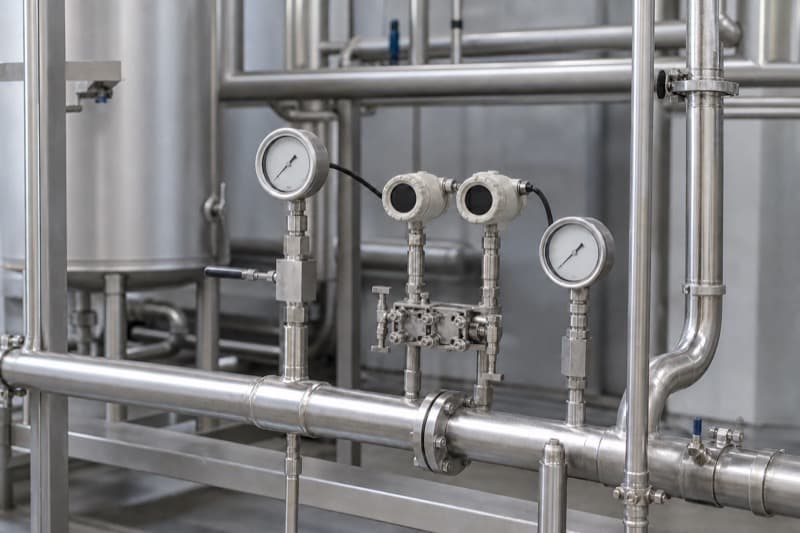
Flow measurement technology has to match the fluid, and picking the wrong type for the application produces a meter that reads confidently and wrongly rather than one that simply fails. Electromagnetic (magnetic) flow meters measure conductive liquids, water, wastewater, most process liquids, using a magnetic field and Faraday's law, with no moving parts and virtually no pressure drop, but they don't work on non-conductive fluids like most hydrocarbons or on gas or steam. Ultrasonic flow meters measure liquid or gas velocity using sound wave transit time, available as clamp-on (no pipe penetration, retrofittable on an existing line) or inline, useful where a conductive-liquid requirement rules out magnetic meters or where a non-invasive install matters. Differential-pressure meters (orifice plate, venturi) measure flow indirectly by reading the pressure drop across a restriction, a mature, well-understood technology still widely specified for steam and gas custody-adjacent metering because of its long track record and available correction standards.
NLS sources these three main technologies across pipe sizes from DN15 up to DN600, with 4-20mA analog and digital (Modbus/HART) output options to integrate with a project's DCS or SCADA system. Reference standards are ISO 4064 for water meter accuracy classes and OIML international recommendations for metrological performance, particularly relevant where a meter feeds a billing or custody-adjacent measurement rather than pure process monitoring.
On Saudi projects, flow meters show up on utility water distribution metering, process line flow monitoring for DCS integration, steam metering on boiler and process heat systems, and sub-metering on multi-tenant hospital and infrastructure facilities where usage needs to be tracked by zone or department.
NLS quotes flow meters against the fluid type, pipe size, expected flow range, required accuracy class, and output signal, and returns a priced quote in USD. Standard electromagnetic meters in common pipe sizes typically source faster than custody-transfer-grade or large-bore ultrasonic and DP meters, which are more often built or calibrated to order.
Specifications
- ✓Technologies: electromagnetic (conductive liquids), ultrasonic (clamp-on or inline), differential-pressure (orifice/venturi)
- ✓Pipe size range: DN15 to DN600
- ✓Output: 4-20mA analog, digital (Modbus/HART)
- ✓Standards referenced: ISO 4064, OIML recommendations
- ✓Selection basis: fluid conductivity, line size, required accuracy class
- ✓Typical use: utility water metering, process flow monitoring, steam metering, sub-metering
Frequently Asked Questions
Which flow meter technology suits water metering?+
Electromagnetic flow meters are the standard choice for water and wastewater metering, since water is conductive, the technology has no moving parts and virtually no pressure drop, and it's well covered under ISO 4064 accuracy classes for water measurement.
Can a flow meter be installed on an existing pipeline without cutting it?+
Yes, in many cases. Clamp-on ultrasonic flow meters mount externally on the pipe wall and measure flow using sound wave transit time, without any pipe penetration, which makes them a practical retrofit option on an existing line.
What's a differential-pressure flow meter and when is it used?+
A differential-pressure meter (orifice plate or venturi) measures flow indirectly by reading the pressure drop as fluid passes through a known restriction. It's a mature technology still widely specified for steam and gas metering, particularly where an established correction standard is needed.
What output signal does NLS supply for flow meters?+
NLS sources flow meters with standard 4-20mA analog output and digital output (Modbus or HART protocol), matched to whatever a project's DCS or SCADA system requires for integration.
Who supplies Flow Meters in Saudi Arabia?+
NLS Industries (Northlane Solutions Company) supplies Flow Meters across Saudi Arabia, including Riyadh, Jeddah, Dammam and Jubail. Send your specification and quantities to info@northlanesolution.com for a quotation.