Gear Motors
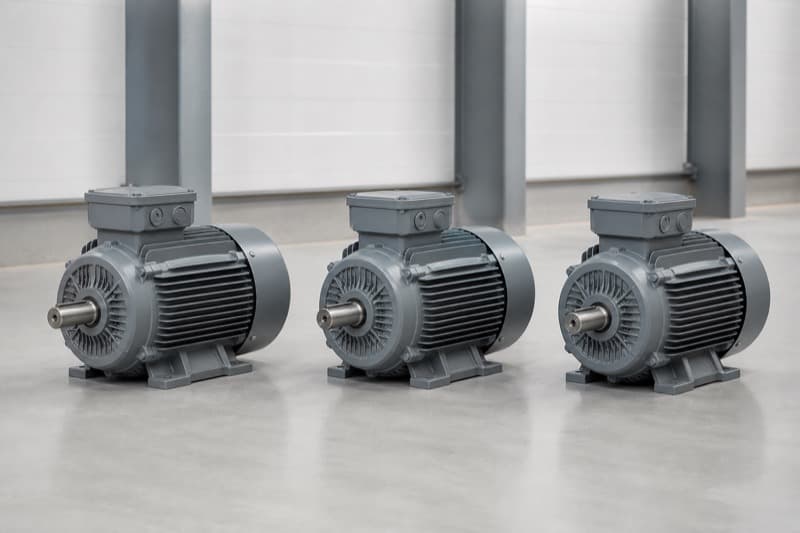
A gear motor combines an electric motor with a reduction gearbox in one coupled unit, delivering lower output speed and higher torque than the motor alone. NLS sources gear motors across helical, bevel-helical, and worm gear configurations, motor half built to IEC 60034-1, sized by reduction ratio and duty cycle for conveyors, mixers, and material-handling drives.
A gear motor is an electric motor bolted straight onto a reduction gearbox, sold and installed as one coupled unit rather than a motor and gearbox sourced separately and aligned on site. The gearbox trades the motor's high shaft speed and low torque for a lower output speed and proportionally higher torque, which is what most conveyor, mixer, and material-handling drives actually need, since very few of those applications run efficiently at a bare motor's 1,450 or 2,900 rpm.
NLS sources gear motors across the three configurations that cover most industrial duty: helical gear units for straightforward inline or right-angle reduction with good efficiency, bevel-helical units where the output shaft needs to sit at 90 degrees to the motor with higher torque capacity than a worm gear, and worm gear units where compact size and self-locking output matter more than top efficiency. The motor half is built to IEC 60034-1 for rated output and temperature rise; the gearbox is specified by reduction ratio, output torque, and service factor rather than a single dominant certifying standard, referencing gear-quality practice under ISO 1328 or DIN 3960 where a project calls for it.
On Saudi projects, gear motors drive conveyor systems in bulk material handling, mixers and agitators in process and utility applications, and slow-speed drives like gate actuators or screw conveyors where the driven equipment needs torque far more than speed. Selecting the right unit comes down to matching reduction ratio and output torque to the driven load's duty cycle, since a gearbox running at a service factor too low for continuous duty wears out well ahead of its rated life.
NLS quotes gear motors against the driven equipment's required output speed, torque, and duty cycle, confirming gear configuration, mounting orientation, and motor kW before pricing, and returns a quote in USD. Standard helical and worm gear units in common ratios typically source within a handful of weeks; unusual ratios or higher-torque bevel-helical units built to order run on a manufacturer-confirmed lead time.
Specifications
- ✓Motor half built to IEC 60034-1 (rated output, temperature rise)
- ✓Gear configurations: helical, bevel-helical, and worm gear
- ✓Reduction ratio: sized to driven-equipment output speed and torque requirement
- ✓Gear-quality reference: ISO 1328 or DIN 3960 where project-specified
- ✓Mounting: foot, flange, or shaft-mounted with torque arm
- ✓Service factor: matched to duty cycle (continuous, intermittent, or high-shock loads)
Frequently Asked Questions
What's the difference between helical, bevel-helical, and worm gear motors?+
Helical units give straightforward reduction at good efficiency. Bevel-helical units turn the output 90 degrees with more torque capacity than worm gears. Worm gear units are compact and self-locking but less efficient. NLS matches the configuration to the driven equipment's layout and torque need.
How does NLS pick the right reduction ratio for a gear motor?+
Off the driven equipment's required output speed and torque, not the motor's own speed. A conveyor or mixer datasheet, or the existing unit's nameplate on a replacement order, gives NLS what's needed to match the ratio.
Are gear motors available with hazardous-area or IE3 motor sections?+
Yes, the motor half can be sourced in IE3 efficiency or Ex-rated construction where the application calls for it, quoted alongside the gearbox as one coupled unit rather than mixed and matched separately.
Who supplies Gear Motors in Saudi Arabia?+
NLS Industries (Northlane Solutions Company) supplies Gear Motors across Saudi Arabia, including Riyadh, Jeddah, Dammam and Jubail. Send your specification and quantities to info@northlanesolution.com for a quotation.