LV Induction Motors
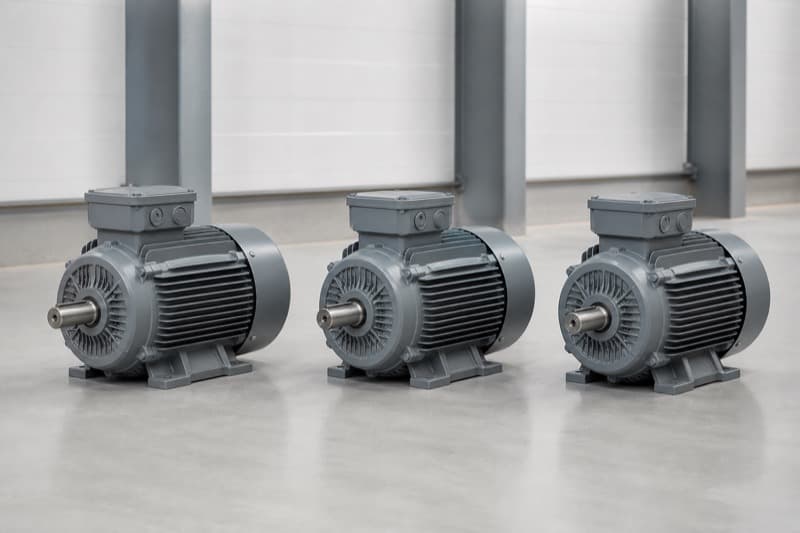
Low voltage induction motors run on standard 400V to 690V three-phase supply, the voltage class covering the overwhelming majority of pumps, fans, and compressors on a Saudi industrial site. NLS sources LV induction motors from fractional kW through 500kW, IE2 through IE4 efficiency classes under IEC 60034-30-1, matched to the driven load's torque and starting duty.
"Low voltage" in motor terms means anything running at or below 1000V, but in practice almost every induction motor on a Saudi industrial or infrastructure site sits in the 380V to 690V three-phase band, fed straight off the plant's LV switchboard. It's the voltage class that covers standard pump, fan, compressor, and conveyor drives, the motors an electrical contractor orders by the dozen rather than the one-off medium voltage unit reserved for a large compressor or chiller. The defining feature isn't the motor construction itself, it's that the winding insulation and terminal box are rated for direct connection to LV switchgear, no step-down transformer or MV starter panel required.
NLS sources LV induction motors across the full efficiency spectrum IEC 60034-30-1 defines: IE2 (standard efficiency), IE3 (premium efficiency, now the default minimum on most Gulf specifications), and IE4 (super premium) where a project's energy code or client standard calls for it. General motor performance follows IEC 60034-1, covering rated output, temperature rise, and duty-cycle definitions. Frame sizes run from fractional kW units for small auxiliary drives up to 500kW for large process pumps and compressors, in TEFC enclosures as standard and TEAAC where ambient heat or dust load is higher than a fan-cooled frame can handle.
On Saudi projects, LV induction motors turn up everywhere a pump, fan, or compressor needs constant-speed drive: HVAC air-handling units, chilled and condenser water pumps, sewage and drainage lift stations, compressed air systems, and general utility equipment across hospital, aviation, and industrial facility builds. Because the voltage class is so common, availability and lead time usually come down to frame size and efficiency class rather than the motor being unusual in any way.
NLS quotes LV induction motors against a motor schedule or single-line diagram, covering kW, frame size, mounting, and enclosure rating, and returns a priced quote in USD. Standard IE3 motors in common frame sizes typically source within a few weeks; IE4 units and less common frame or mounting combinations run on a lead time the manufacturer confirms at order stage.
Specifications
- ✓Voltage class: 380V to 690V three-phase, direct LV switchgear connection
- ✓Power range: fractional kW to 500kW
- ✓Efficiency classes: IE2, IE3, and IE4 to IEC 60034-30-1
- ✓General performance to IEC 60034-1 (rated output, temperature rise, duty cycle)
- ✓Enclosure: TEFC standard, TEAAC for high-ambient or dusty conditions
- ✓Mounting: foot (B3) and flange (B5/B14) configurations
Frequently Asked Questions
What voltage range counts as low voltage for induction motors?+
Low voltage covers motors rated up to 1000V, though almost every LV motor on a Saudi site runs on the 380V to 690V three-phase band. NLS sources across this full range, matched to the plant's LV switchgear voltage.
What's the difference between IE3 and IE4 efficiency motors?+
IE4 (super premium efficiency) cuts energy loss further than IE3 (premium efficiency) under IEC 60034-30-1, at a higher upfront cost. Most Gulf specifications now set IE3 as the minimum, with IE4 reserved for projects with a specific energy-code requirement.
Can NLS match an LV motor to an existing frame or mounting spec?+
Yes. NLS quotes against a motor schedule or nameplate reference, matching frame size, foot or flange mounting, and enclosure rating so a replacement or expansion unit fits the existing installation without rework.
Who supplies LV Induction Motors in Saudi Arabia?+
NLS Industries (Northlane Solutions Company) supplies LV Induction Motors across Saudi Arabia, including Riyadh, Jeddah, Dammam and Jubail. Send your specification and quantities to info@northlanesolution.com for a quotation.