Welding Electrodes
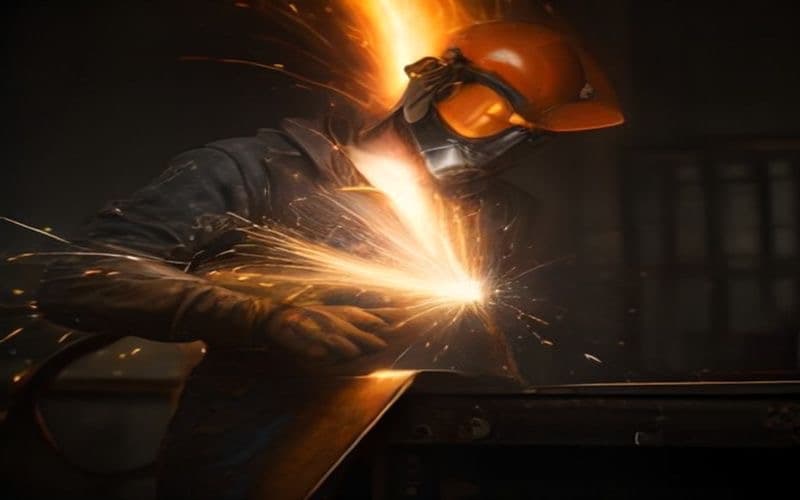
Welding electrodes are the coated consumable rods used in MMA (stick) welding, where the coating burns to shield the arc, adds alloying elements, and forms a slag layer that controls how the weld cools. NLS sources carbon steel electrodes to AWS A5.1 and ISO 2560, across rutile, basic (low-hydrogen), and cellulosic coating types, matched to the joint's position.
A welding electrode isn't just a piece of wire with current running through it. The coating around the core wire does most of the actual work: it burns off in the arc to produce a shielding gas that protects the weld pool from atmospheric contamination, it adds alloying elements that end up in the deposited weld metal, and it forms a slag layer over the cooling bead that controls cooling rate and protects the metal while it's still hot. The core wire itself is usually a low-carbon steel common to most electrode types; the coating chemistry is what actually determines the electrode's classification, arc characteristics, and where it can be used.
NLS sources three coating families under AWS A5.1 and the equivalent ISO 2560 classification. Cellulosic electrodes (E6010, E6011) give a deep-penetrating, digging arc favored for open-root pipe welding, but they're harder to run and leave more spatter. Rutile electrodes (E6013) run smoothly with a stable arc and easy slag removal, the general-purpose choice for light fabrication and repair work where appearance and ease of use matter more than maximum strength. Basic, or low-hydrogen, electrodes (E7018 and similar) give the lowest weld metal hydrogen content and the best mechanical properties of the three, the specification most structural and pressure-piping welding procedures call for, but they carry a hard requirement: they have to be stored, and once opened, kept in a heated holding oven, because they pick up moisture from ambient air, and that moisture becomes hydrogen in the weld metal, a direct cause of hydrogen cracking.
On Saudi fabrication and site projects, E7018 and other low-hydrogen grades dominate structural steel and pressure-piping welding wherever the WPS calls for guaranteed mechanical properties, while E6013 rutile electrodes cover general fabrication, brackets, and non-critical site repair where a WPS doesn't mandate low-hydrogen consumables. Storage discipline matters as much in Riyadh's climate as anywhere: humidity swings and site conditions both degrade an opened, unbaked low-hydrogen electrode faster than a spec sheet might suggest.
NLS quotes electrodes against the AWS or ISO classification the project's WPS specifies, diameter, and quantity by weight, and returns a priced quote in USD. E6013 and E7018 in common diameters typically source faster than less common cellulosic or higher-strength low-hydrogen grades, which more often carry a longer manufacturer lead time.
Specifications
- ✓Classification: AWS A5.1 and ISO 2560 for carbon steel covered electrodes
- ✓Coating types: cellulosic (deep penetration, pipe root pass), rutile (general purpose, smooth arc), basic/low-hydrogen (structural, pressure piping)
- ✓Common grades: E6010/E6011 (cellulosic), E6013 (rutile), E7018 (low-hydrogen)
- ✓Low-hydrogen electrodes require heated storage and holding ovens once the container is opened
- ✓Diameter range: standard sizes from 2.5mm to 5.0mm across coating types
- ✓Selection basis: welding position, base metal, and WPS-specified mechanical property requirement
Frequently Asked Questions
Why do low-hydrogen electrodes need to be stored in a heated oven?+
Low-hydrogen (basic) electrode coatings absorb moisture from ambient air once the sealed container is opened. That moisture breaks down in the arc and enters the weld metal as hydrogen, which is a direct cause of hydrogen cracking in structural and pressure-piping welds, so opened electrodes need to be held in a heated oven, typically around 100-150°C, to keep coating moisture below the level a critical WPS allows.
What's the difference between E6013 and E7018 electrodes?+
E6013 is a rutile-coated electrode that runs smoothly with an easy-to-remove slag, suited to general fabrication and light repair. E7018 is a low-hydrogen electrode that delivers higher, more consistent mechanical properties and lower hydrogen content in the weld, which is why most structural and pressure-piping WPS documents specify it over E6013.
Does NLS supply electrodes for pipe root-pass welding?+
Yes. NLS sources cellulosic electrodes such as E6010 and E6011, which give the deep, digging arc penetration that open-root pipe welding needs, alongside the rutile and low-hydrogen ranges used for fill and cap passes and general fabrication.
Who supplies Welding Electrodes in Saudi Arabia?+
NLS Industries (Northlane Solutions Company) supplies Welding Electrodes across Saudi Arabia, including Riyadh, Jeddah, Dammam and Jubail. Send your specification and quantities to info@northlanesolution.com for a quotation.