Safety Footwear
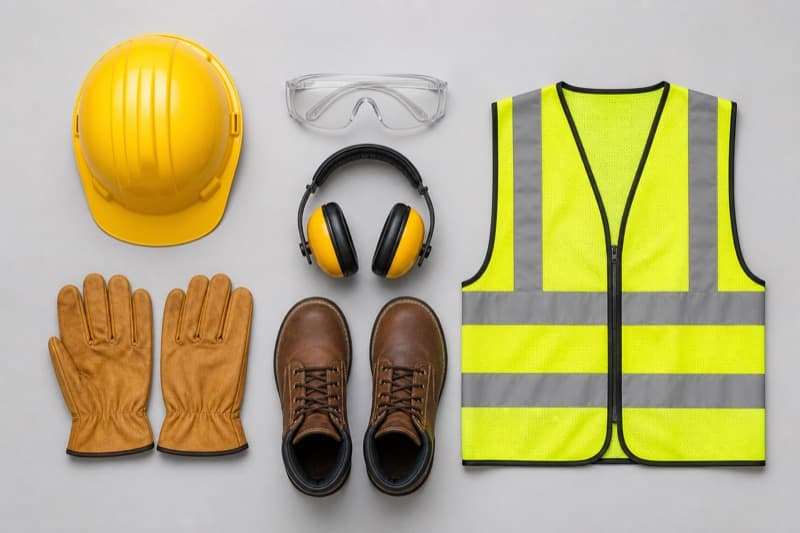
Safety footwear protects against impact, compression, puncture, and slip hazards on a construction or industrial site, rated by toe protection class and sole properties rather than picked as general workwear. NLS sources steel-toe and composite-toe safety boots to EN ISO 20345 (S1 to S3 protection classes) and ASTM F2413, for construction, MEP, and plant maintenance workforces on Saudi projects.
Safety footwear is classified by a specific set of tested properties, not a general 'steel toe' label. Under EN ISO 20345, the baseline SB rating covers toe protection against a defined impact and compression load. S1 adds antistatic properties, energy absorption at the heel, and a closed seat region. S2 adds water penetration resistance. S3, the class most commonly specified on Saudi construction and industrial sites, adds a penetration-resistant midsole against sharp objects on the ground and a cleated outsole for slip resistance. A boot marketed as 'safety footwear' without a stated class doesn't tell a site safety officer whether it actually meets the site's PPE matrix requirement.
NLS sources steel-toe boots, the traditional and still widely specified option, and composite-toe (non-metallic) boots, which weigh less and don't conduct heat or cold the way steel does, an advantage in Saudi summer site conditions and around live electrical work where a fully non-metallic boot avoids any metal-detector or arc-flash concern. Sole construction covers standard PU/rubber outsoles and, for chemical or oil-exposed environments, oil- and chemical-resistant compounds. Reference standards are EN ISO 20345 for the European/Gulf-common classification system and ASTM F2413 where a project's PPE spec follows US practice instead.
On Saudi projects, the protection class needed varies by role and site area: general construction and MEP trades typically need S3 for penetration resistance against nails, rebar offcuts, and general site debris, while lighter-duty roles or controlled indoor environments may only require S1.
NLS quotes safety footwear against the required class (S1/S2/S3), toe material preference (steel or composite), size run, and quantity, and returns a priced quote in USD. Common sizes in standard S3 steel-toe boots typically source faster and at better per-unit pricing on bulk orders than composite-toe or specialty chemical-resistant lines.
Specifications
- ✓Protection classes: SB baseline, S1, S2, S3 (most common on Saudi sites) per EN ISO 20345
- ✓Toe protection: steel toe cap or composite (non-metallic) toe cap
- ✓Sole features (S3): penetration-resistant midsole, cleated slip-resistant outsole
- ✓Standards referenced: EN ISO 20345, ASTM F2413
- ✓Sole compound options: standard PU/rubber, oil- and chemical-resistant
- ✓Typical use: general construction, MEP trades, plant maintenance workforces
Frequently Asked Questions
What's the difference between S1, S2, and S3 safety footwear?+
S1 covers antistatic properties and heel energy absorption on top of basic toe protection. S2 adds water penetration resistance. S3, the most commonly specified class on Saudi construction sites, adds a penetration-resistant midsole and a slip-resistant cleated outsole on top of the S2 properties.
Should I choose steel toe or composite toe safety boots?+
Composite toe boots weigh less and don't conduct heat, cold, or electricity the way steel does, an advantage in hot conditions or near live electrical work. Steel toe remains the traditional, widely specified, generally lower-cost option for general construction duty.
What protection class do most Saudi construction sites require?+
S3 under EN ISO 20345 is the most commonly required class on general construction and MEP work, covering penetration resistance and slip resistance in addition to basic toe protection, though the exact requirement depends on each project's PPE matrix.
What standards does NLS reference for safety footwear?+
EN ISO 20345, the European classification system common across Gulf project specifications, and ASTM F2413 where a project's PPE requirement follows US practice instead.
Who supplies Safety Footwear in Saudi Arabia?+
NLS Industries (Northlane Solutions Company) supplies Safety Footwear across Saudi Arabia, including Riyadh, Jeddah, Dammam and Jubail. Send your specification and quantities to info@northlanesolution.com for a quotation.