
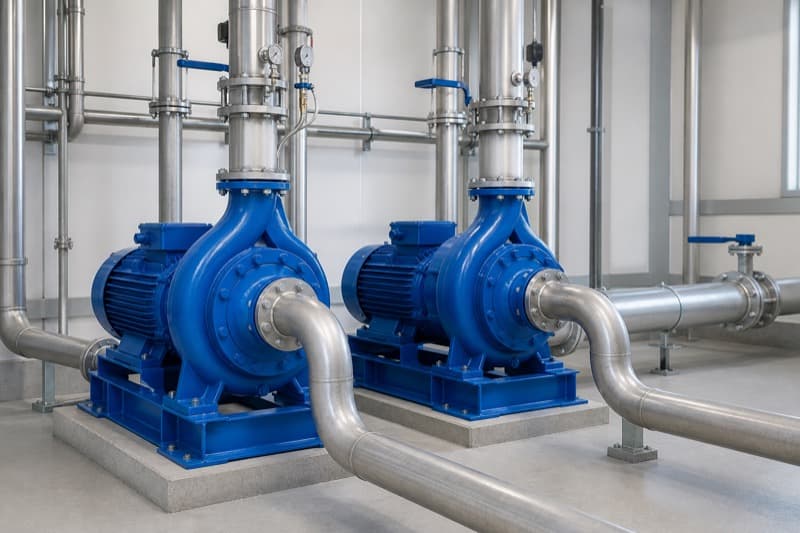
Fire Fighting Pumps
Fire fighting pumps supply the pressure and flow a building or site's fire main needs the moment a hydrant, hose reel, or sprinkler system calls for water, sized and installed to NFPA 20. NLS sources UL/FM listed electric and diesel-driven fire pump sets in horizontal split-case and vertical turbine configurations for hospital, aviation, and industrial sites across Saudi Arabia.
A fire pump exists for one job: sit idle for years, then start within seconds and deliver rated flow and pressure the instant a fire main's demand drops below its set point, whether that trigger is a hydrant being opened, a sprinkler head fusing, or a hose reel valve turning. That reliability requirement is why fire pump installation follows NFPA 20 rather than a general pump sizing exercise, covering everything from the pump curve shape (a flat, non-overloading curve across the full flow range) to controller logic, jockey pump backup, and test header arrangements.
NLS sources fire pumps in the two configurations NFPA 20 recognizes for this duty: horizontal split-case pumps, the standard choice where the water source sits above the pump (a gravity tank or elevated reservoir) or a positive-suction condition exists, and vertical turbine pumps, used where the pump draws from a below-grade fire reserve tank or reservoir and needs to lift water up to the fire main rather than receive it under positive pressure. Driver choice matters as much as pump selection: electric-motor-driven fire pumps are standard where utility power reliability supports it, while diesel-engine-driven fire pumps provide the independent power source NFPA 20 requires on sites where a fire event might coincide with a power outage, which is common practice on hospital and critical-infrastructure sites.
UL and FM product listing is the product-conformance mark that matters most in this category: it verifies the specific pump and controller model has been tested against NFPA 20's performance requirements, and most Saudi fire authorities and insurance underwriters expect to see it on the equipment schedule before approving a system. NLS quotes fire pump sets with that listing status stated up front rather than left for the buyer to verify separately.
NLS quotes fire fighting pump packages against the fire main's required flow (typically stated in the hydraulic calculation or the site's fire protection design) and the available suction condition, and returns a priced quote in USD covering the pump, driver, and controller as a set, since NFPA 20 treats the fire pump assembly as one certified package rather than components sourced and matched independently.
Specifications
- ✓Configuration: horizontal split-case and vertical turbine fire pump sets
- ✓Standard referenced: NFPA 20 installation of stationary fire pumps for fire protection
- ✓Product listing: UL and FM listed pump and controller models (product conformance, not an NLS certification)
- ✓Driver options: electric motor drive and diesel engine drive for independent power source
- ✓Sizing basis: fire main hydraulic calculation flow requirement and available suction condition
- ✓Typical use: hospital and healthcare facilities, aviation infrastructure, industrial and critical-infrastructure sites
Frequently Asked Questions
Why do fire pumps have to be installed to NFPA 20 specifically?+
NFPA 20 covers the reliability requirements a general pump sizing standard doesn't: a flat, non-overloading pump curve across the full flow range, controller and jockey pump logic, test header arrangements, and driver redundancy. A fire pump has to start and perform correctly the first time it's called on, after sitting idle for potentially years.
Should a fire pump be electric or diesel driven?+
Electric-motor-driven fire pumps suit sites where utility power reliability is adequate. Diesel-engine-driven fire pumps give an independent power source that keeps working through a utility outage, standard practice on hospital and critical-infrastructure sites where a fire event and a power failure happening together has to stay covered.
What does UL/FM listing mean on a fire pump, and does NLS hold that certification?+
UL and FM listing means the specific pump and controller model has been independently tested against NFPA 20's performance requirements, a mark most Saudi fire authorities and insurers expect on the equipment schedule. It's a certification of the product, not of NLS; NLS sources pump sets that carry the listing and states that status on the quote.
Who supplies Fire Fighting Pumps in Saudi Arabia?+
NLS Industries (Northlane Solutions Company) supplies Fire Fighting Pumps across Saudi Arabia, including Riyadh, Jeddah, Dammam and Jubail. Send your specification and quantities to info@northlanesolution.com for a quotation.