Coaxial Cables
Coaxial cable carries RF and video signal through a shielded center conductor design that resists interference over the cable's length, used for CCTV, antenna, and RF signal runs. NLS sources RG-series coaxial cable to IEC 61196, in the impedance and shielding grades security, communication, and broadcast systems specify on Saudi industrial and commercial projects.
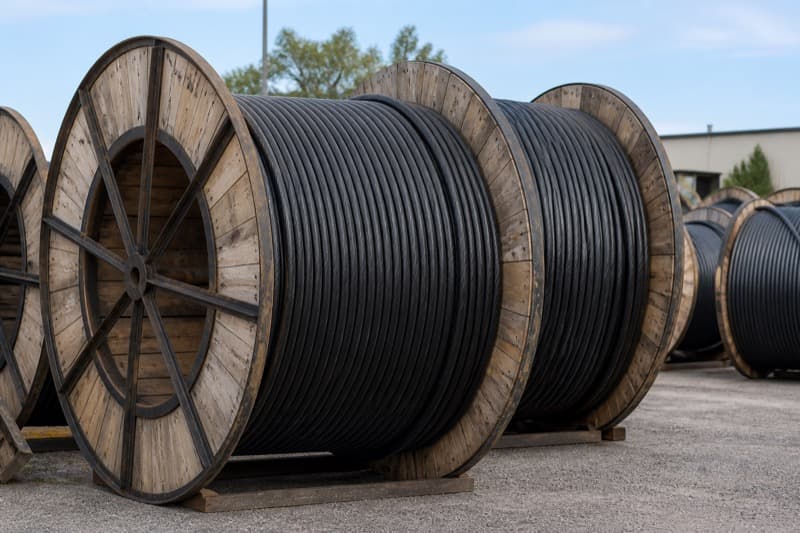
Coaxial cable gets its name from its construction: a center conductor, a dielectric insulating layer, a metallic shield, and an outer jacket, all sharing the same axis. That shield is the whole point, it keeps RF interference out of the signal path and keeps the cable's own signal from radiating out and interfering with anything nearby, which is why coax remains the standard for CCTV video, antenna feeds, and RF signal transport even in an increasingly fiber and IP-based world.
NLS sources coaxial cable in the common RG-series grades, RG6 and RG59 for CCTV and video distribution, and other RG and LMR-type grades for RF and antenna feeder applications, to IEC 61196 as the construction and testing reference. Shielding options range from single braid to quad-shield for higher interference environments, and cable can be supplied with or without an integrated power conductor for powered CCTV camera runs.
On Saudi projects, coaxial cable shows up on CCTV and security camera systems, antenna and communication tower feeder runs, and legacy analog video distribution in facilities that haven't fully migrated to IP-based systems. Security system design increasingly specifies exact cable grade and shielding level given how camera resolution and cable run length interact with signal loss.
A project team sends the RG grade or impedance spec called out in the security or communications design, along with reel length, and NLS returns a priced quote in USD. Coaxial cable is a well-established, widely manufactured product, so common grades typically source quickly compared to specialty cable classes on this site.
Specifications
- ✓Grades: RG6, RG59, and other RG/LMR-type grades
- ✓Standard referenced: IEC 61196
- ✓Shielding: single braid through quad-shield for high-interference environments
- ✓Optional integrated power conductor for CCTV camera runs
- ✓Typical use: CCTV/video, antenna and RF feeder, legacy analog video distribution
- ✓Impedance matched to the system design (commonly 75 ohm for video, 50 ohm for RF)
Frequently Asked Questions
What's the difference between RG6 and RG59 coaxial cable?+
RG6 has a thicker center conductor and generally lower signal loss over distance, making it the standard for longer CCTV and video runs. RG59 suits shorter runs and is still common on legacy analog video systems.
Can NLS supply coaxial cable with an integrated power conductor for CCTV?+
Yes, combined video and power coaxial cable is available for CCTV camera runs that need power delivered over the same cable as the video signal.
Why does shielding level matter on coaxial cable orders?+
Higher shielding (quad-shield versus single braid) matters more in environments with heavy RF interference from nearby equipment. The security or communications design usually specifies the exact shielding level needed.
Who supplies Coaxial Cables in Saudi Arabia?+
NLS Industries (Northlane Solutions Company) supplies Coaxial Cables across Saudi Arabia, including Riyadh, Jeddah, Dammam and Jubail. Send your specification and quantities to info@northlanesolution.com for a quotation.