
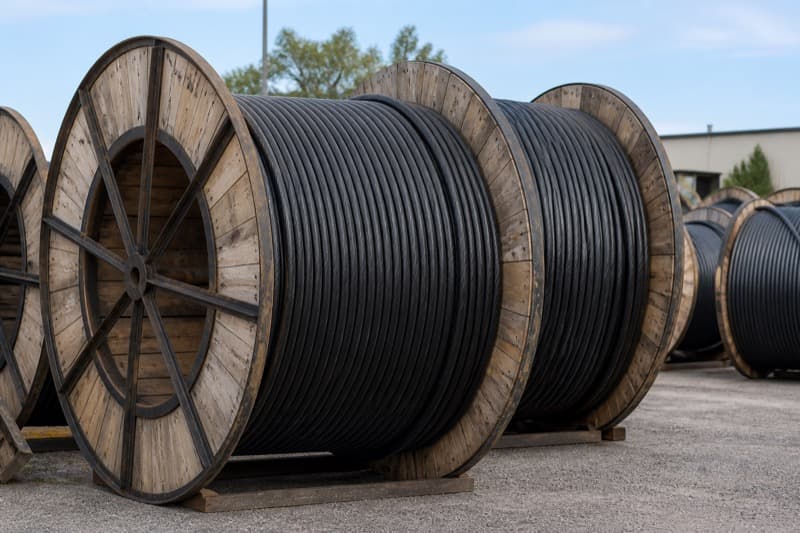
Silicone Heat-Resistant Cables
Silicone-insulated cable withstands continuous operating temperatures far above standard PVC or XLPE cable, built for wiring inside ovens, furnaces, lighting fixtures, and other high-heat equipment. NLS sources silicone rubber cable to IEC 60245-3, in fine-stranded copper conductor, for high-temperature industrial wiring on Saudi process and manufacturing sites.
Silicone rubber insulation handles continuous operating temperatures that would destroy PVC or even XLPE cable within hours, commonly rated up to 180°C continuous and higher for short-term excursions, while staying flexible across a wide temperature range from deep cold through extreme heat. That combination of heat resistance and flexibility is what makes it the standard choice for wiring that lives close to a heat source rather than routed away from it.
NLS sources silicone rubber cable to IEC 60245-3, in fine-stranded copper conductor (silicone cable is almost always built for flexibility, matching its typical installation inside equipment rather than as a fixed feeder run), single-core and multi-core, in the smaller cross-sections typical of internal equipment wiring rather than large power feeder sizes.
On Saudi industrial and manufacturing sites, silicone cable wires the internals of ovens, furnaces, and heat-treatment equipment, high-wattage lighting fixtures and floodlights that generate significant heat at the fitting, and any control or power wiring routed through a high-ambient-temperature enclosure or duct. It's a specialized, lower-volume item compared to general power cable, chosen specifically because the installation environment rules out standard insulation.
A project team sends conductor size, core count, and length, along with the maximum operating temperature the application requires, and NLS returns a priced quote in USD. Because silicone cable serves a narrower set of applications than general power or control cable, it's typically sourced against confirmed manufacturer lead time rather than assumed to be an off-the-shelf item.
Specifications
- ✓Insulation: silicone rubber, continuous operating rating up to 180°C
- ✓Standard referenced: IEC 60245-3
- ✓Conductor: fine-stranded copper for flexibility
- ✓Configuration: single-core and multi-core, smaller cross-sections typical
- ✓Remains flexible across a wide temperature range, cold through extreme heat
- ✓Typical use: oven/furnace internal wiring, high-heat lighting fixtures, high-ambient enclosures
Frequently Asked Questions
What temperature can silicone cable withstand compared to standard cable?+
Silicone cable is commonly rated for continuous operation up to 180°C, well above the roughly 70°C to 90°C continuous rating of standard PVC or XLPE cable.
Where does silicone cable typically get used on an industrial site?+
Inside ovens, furnaces, and heat-treatment equipment, high-wattage lighting fixtures, and any wiring routed through high-ambient-temperature enclosures or ducts.
Is silicone cable flexible like standard flexible cable?+
Yes. It's almost always built with fine-stranded conductor for flexibility, matching how it's typically installed inside equipment enclosures rather than as a fixed run.
Who supplies Silicone Heat-Resistant Cables in Saudi Arabia?+
NLS Industries (Northlane Solutions Company) supplies Silicone Heat-Resistant Cables across Saudi Arabia, including Riyadh, Jeddah, Dammam and Jubail. Send your specification and quantities to info@northlanesolution.com for a quotation.