
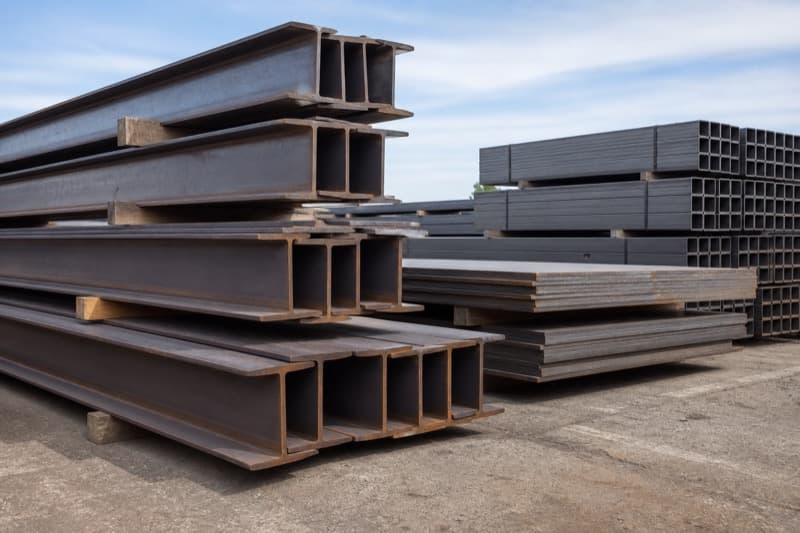
Steel Beams & Structural Sections
Structural steel beams and sections, I-beams, H-beams, and channel-type sections, form the load-bearing frame of a steel structure, carrying bending and shear loads across a span. NLS sources hot-rolled universal beams, columns, and W-shapes to ASTM A36, EN 10025-2, and BS 4-1, sized against a structural steel drawing rather than a generic beam list.
A structural steel beam or section is a hot-rolled steel shape engineered to carry load along its length by resisting bending and shear, its cross-section (an I, H, C, or angle shape) putting steel where the bending stress is highest and saving weight everywhere else. That shape is what lets a beam span a distance and carry a floor, a roof, or an equipment load without the mass of a solid steel bar doing the same job.
NLS sources three families of section. Universal beams (UB) and universal columns (UC), the standard European I-shaped sections, come to EN 10025-2 for chemical and mechanical properties, sized from small secondary members up to primary column and beam sections on multi-story frames. American-pattern W-shapes (wide-flange beams) follow ASTM A36 for general structural steel, the common reference on projects built to US design practice. BS 4-1 covers the older imperial hot-rolled section series still specified on some Gulf projects, universal beams, columns, and joists in inch-based designations. Channel sections (C-shapes) and equal or unequal angles round out the range for purlins, bracing, and secondary framing, cut and drilled to a fabrication drawing rather than supplied as raw stock alone.
On Saudi projects, structural sections build the primary frame of warehouses, hangars, workshops, and process structures, plus secondary steel: purlins, girts, bracing, and platform support beams. Pipe racks and equipment support structures lean heavily on universal beams and columns sized to the exact load case in the structural calculation, not a nominal size picked off a catalog page.
NLS quotes structural sections against a steel schedule or the structural drawing set, covering section designation, grade, length, and any fabrication (cutting, drilling, coping) called out, and returns a priced quote in USD. Common UB, UC, and W-shape sizes in mild steel grade typically move faster than large, heavy sections or higher grades, which usually carry a mill or stockist lead time confirmed at quote stage.
Specifications
- ✓Section types: universal beams (UB), universal columns (UC), W-shapes, channels (C), angles
- ✓Standards referenced: ASTM A36, EN 10025-2, BS 4-1
- ✓Production: hot-rolled structural sections
- ✓Grade: mild structural steel, higher grades on request
- ✓Fabrication: cut-to-length, drilled, and coped to a structural drawing
- ✓Typical use: primary steel frames, purlins, bracing, pipe rack beams and columns
Frequently Asked Questions
What's the difference between universal beams (UB) and W-shape beams?+
UB sections follow European EN 10025-2 sizing and property conventions, while W-shapes follow American ASTM practice with different dimension tables. Both are I-shaped structural beams; which one a project needs depends on the design code the structural engineer used, not on performance.
Does NLS supply cut and drilled steel sections, or raw lengths only?+
Both. Sections can be supplied as standard mill lengths or fabricated to a drawing, cut to size, drilled, and coped, depending on what the structural or fabrication drawing calls for.
What information does NLS need to quote structural beams and sections?+
The section designation (e.g. UB 305x165x40 or W12x40), grade, length, and any fabrication required, ideally from a steel schedule or the structural drawing set, since beam sizing is project-specific rather than a stock catalog choice.
Who supplies Steel Beams & Structural Sections in Saudi Arabia?+
NLS Industries (Northlane Solutions Company) supplies Steel Beams & Structural Sections across Saudi Arabia, including Riyadh, Jeddah, Dammam and Jubail. Send your specification and quantities to info@northlanesolution.com for a quotation.