Angles, Channels & Flats
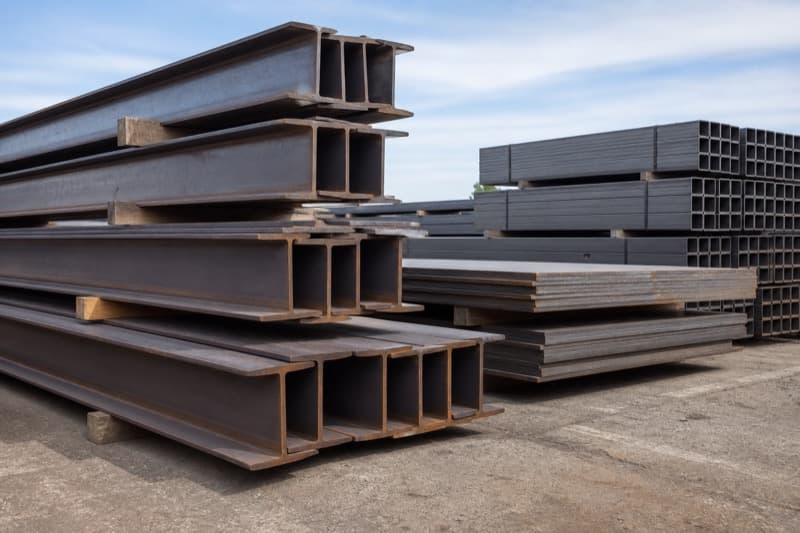
Angles (L-shape), channels (C-shape), and flat bars are the standard hot-rolled sections behind secondary steel: bracing, brackets, supports, and light framing, rather than primary beams and columns. NLS sources these sections to EN 10025-2 and ASTM A36, equal and unequal angles, standard channel sizes, and flat bar in a range of widths and thicknesses, supplied cut to length or as fabricated brackets.
Not every steel member in a structure is a primary beam or column. Angles, channels, and flat bars do the secondary and tertiary work: bracing that stiffens a frame against sway, brackets that support cable tray or ductwork, ladder rails, small platform frames, and stiffeners welded onto a larger fabricated member. They're lighter sections doing lighter jobs, but they're specified with the same rigor as primary steel wherever they carry calculated load rather than just filling a gap.
NLS sources angle (L-shape), channel (C-shape), and flat bar sections to EN 10025-2 for European-designation structural steel and ASTM A36 for American general structural steel, the two most common reference standards across Saudi projects depending on which design code a job follows. Angles come in equal-leg and unequal-leg profiles, sized from small bracing angles up to heavier structural angles used in tower and lattice work. Channels come in standard rolled sizes used for purlins, bracing, and light beams. Flat bar covers a wide range of widths and thicknesses, used for stiffeners, straps, ladder rungs, and general fabrication stock.
On Saudi projects, this range covers cable tray and pipe support brackets, wind bracing on steel frames, ladder and stair stringers, small equipment platforms, and the general secondary steel that a fabrication drawing calls out alongside the primary structure. It's usually ordered as a line-item list against a fabrication drawing or bill of materials rather than a single large order.
NLS quotes angles, channels, and flats against section size, length, grade, and any fabrication (cutting, drilling, welding into brackets), and returns a priced quote in USD. Standard mild steel sections in common sizes typically source fastest, while larger structural angles or custom fabricated bracket sets carry a supplier-confirmed lead time.
Specifications
- ✓Section types: equal and unequal-leg angles (L), channels (C), flat bar
- ✓Standards referenced: EN 10025-2, ASTM A36
- ✓Production: hot-rolled structural sections
- ✓Angle sizes: from small bracing angles to heavier structural angles
- ✓Flat bar: wide range of widths and thicknesses
- ✓Typical use: bracing, brackets, stiffeners, ladder and platform framing
Frequently Asked Questions
What's the difference between equal-leg and unequal-leg angles?+
Equal-leg angles have two legs of the same width, used where load is roughly symmetric. Unequal-leg angles have one longer leg, giving more section strength in one direction, used where a bracket or brace needs more capacity on one axis than the other.
Can NLS supply angles and channels already cut and welded into brackets?+
Yes. These sections can be supplied as raw cut-to-length stock or fabricated into finished brackets, stiffeners, or frames per a fabrication drawing, depending on what the order calls for.
Which standard applies, EN 10025-2 or ASTM A36?+
It depends on the design code the project follows. EN 10025-2 covers European-designation structural steel (S235, S275, S355), while ASTM A36 covers American general structural steel. The structural drawing or steel schedule will specify which one applies.
Who supplies Angles, Channels & Flats in Saudi Arabia?+
NLS Industries (Northlane Solutions Company) supplies Angles, Channels & Flats across Saudi Arabia, including Riyadh, Jeddah, Dammam and Jubail. Send your specification and quantities to info@northlanesolution.com for a quotation.