Instrumentation Cables
Instrumentation cable carries low-level signals between field instruments and control rooms without picking up electrical noise, using individually and overall screened pairs or triads. NLS sources 0.5mm² to 1.5mm² instrumentation cable in twisted pair, triad, and multi-pair constructions to BS 5308, for DCS, PLC, and SCADA wiring on process and utility projects.
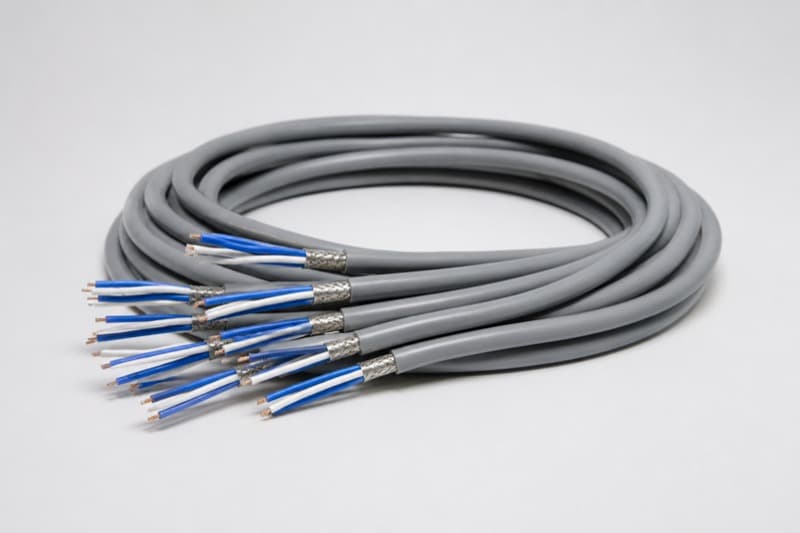
Instrumentation cable does one job that power cable doesn't: it carries a low-voltage signal, often 4-20mA or a digital protocol, from a field transmitter back to a control room without the signal degrading from electrical interference picked up along the route. That's why the construction is built around screening rather than current-carrying capacity. Individual pairs get their own foil screen, and the full cable gets an overall screen (foil, braid, or both), each terminated to a drain wire so the screen actually does its job at the panel end.
NLS sources instrumentation cable in twisted pair, triad, and multi-pair (2, 4, 8, 12, 19, 24 pair and larger) constructions, conductor sizes from 0.5mm² to 1.5mm², individually screened and overall screened (IS/OS) or overall screened only depending on the loop count and noise environment. Reference standards are typically BS 5308 Part 1 and Part 2 for the screening and construction, with PVC or LSZH sheath options.
Typical use on Saudi projects is DCS and PLC field wiring on process plants, SCADA loop wiring for utility and pump station monitoring, and instrumentation runs feeding building management systems on hospital and aviation infrastructure jobs. These are usually specified by the instrumentation and controls engineer down to the pair count and screen type, so the RFQ is often a direct match against a cable schedule rather than an open spec.
Sourcing works the same way as NLS's other cable categories: send the cable schedule, or the pair count and loop list if a schedule isn't finalized yet, and NLS returns a priced quote in USD. Because instrumentation cable ships on smaller reels than power cable, small orders under a few hundred meters are usually quicker to source than large multi-pair drums, which may run against manufacturer minimums.
Specifications
- ✓Construction: twisted pair, triad, and multi-pair (2 to 24+ pairs)
- ✓Screening: individual pair screen plus overall screen (IS/OS), foil, braid, or combined
- ✓Conductor size: 0.5mm² to 1.5mm², stranded copper
- ✓Standards referenced: BS 5308 Part 1 and Part 2
- ✓Typical signal: 4-20mA analog loops and low-voltage digital control signals
- ✓Sheath: PVC standard, LSZH available for indoor/life-safety areas
Frequently Asked Questions
What's the difference between instrumentation cable and control cable?+
Instrumentation cable is built to carry low-level signals, often 4-20mA loops, with screening to block electrical noise. Control cable carries higher current for switching and actuation between panels and equipment. A project's I&C schedule and its electrical schedule usually specify them separately.
Why does instrumentation cable need individual and overall screening?+
A 4-20mA signal is weak enough that nearby power cable or motor starters can induce noise onto it. Individual pair screening isolates each signal pair, and an overall screen protects the whole cable run, both grounded correctly at one end to actually work.
What pair counts does NLS supply for instrumentation cable?+
NLS sources instrumentation cable from single twisted pairs up to multi-pair constructions of 24 pairs and larger, matched to the loop count on a project's instrumentation cable schedule.
What's the lead time for instrumentation cable in Saudi Arabia?+
Small orders under a few hundred meters typically source faster than large multi-pair drums, which can run against manufacturer minimum order quantities. NLS confirms actual lead time once the pair count and screen type are set.
Who supplies Instrumentation Cables in Saudi Arabia?+
NLS Industries (Northlane Solutions Company) supplies Instrumentation Cables across Saudi Arabia, including Riyadh, Jeddah, Dammam and Jubail. Send your specification and quantities to info@northlanesolution.com for a quotation.