
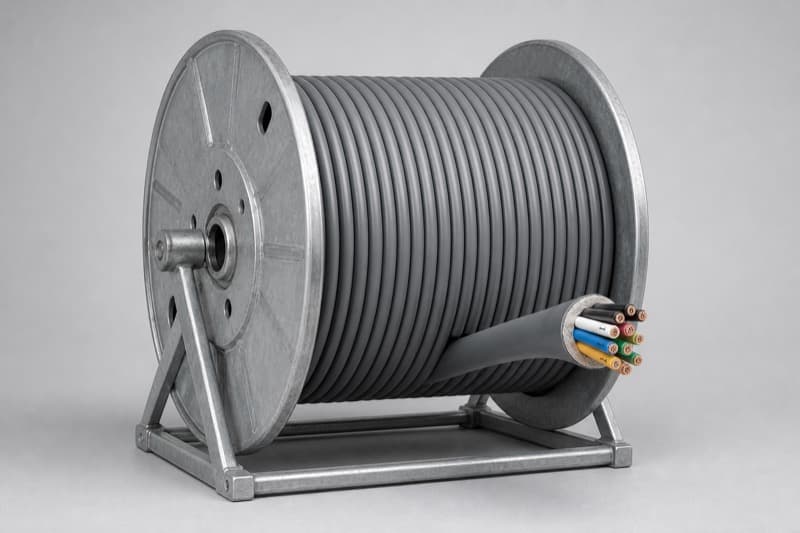
Control Cables
Control cable carries switching and actuation signals between panels, motor starters, and field equipment, typically multi-core with numbered cores for fast panel wiring. NLS sources 1.5mm² to 4mm² multi-core control cable, 2 to 61 cores, copper conductor, PVC or XLPE insulated, to BS 6346, for MCC, switchgear, and field junction box wiring on Saudi industrial and infrastructure projects.
Control cable sits between power cable and instrumentation cable in what it carries: not the main current feeding a motor, and not a low-level analog signal, but the switching, interlock, and status signals that make a motor control center, a switchgear panel, or a field junction box actually function as a system. It's built multi-core, with each core numbered on the insulation so a panel builder or a site electrician can wire against a schedule without tracing colors under a multimeter.
NLS sources control cable in core counts from 2 up to 61, conductor sizes typically 1.5mm² and 2.5mm² for standard control circuits and up to 4mm² for higher-current switching, PVC insulated as standard with XLPE and LSZH options where the spec calls for it. Reference standards are BS 6346 for PVC power and control cable and IEC 60227 for the general PVC insulated cable family, matched to whatever the electrical spec calls out.
Typical Saudi project use is wiring between motor control centers and field-mounted starters, interlocking between switchgear panels, control wiring for pump stations and HVAC plant rooms, and multi-core runs feeding remote junction boxes on process and utility sites. These are usually taken straight off a control schedule or a panel wiring diagram, since the core count and numbering sequence has to match what the panel builder expects.
Sourcing runs the same as NLS's other cable lines: send the core count, conductor size, and cable length from the schedule or drawing, and NLS returns a priced quote in USD with lead time set by the specific core count and drum length ordered. Standard core counts in common sizes are usually quicker to source than unusual counts that fall outside a manufacturer's standard range.
Specifications
- ✓Core count: 2 to 61 cores, multi-core, numbered core identification
- ✓Conductor size: 1.5mm² and 2.5mm² standard, up to 4mm² for higher-current control circuits
- ✓Insulation: PVC standard, XLPE and LSZH options
- ✓Standards referenced: BS 6346, IEC 60227
- ✓Typical use: MCC wiring, switchgear interlocking, field junction box runs
- ✓Conductor: stranded copper
Frequently Asked Questions
What's the difference between control cable and power cable?+
Power cable carries the main current feeding a motor or load. Control cable carries the lower-current switching, interlock, and status signals that operate contactors, relays, and indicator circuits between panels and field equipment, usually multi-core with numbered cores.
What core counts does NLS supply for control cable?+
NLS sources multi-core control cable from 2 cores up to 61 cores, matched to the core count and numbering sequence a project's control schedule or panel wiring diagram specifies.
Is control cable the same as instrumentation cable?+
No. Control cable carries switching and actuation signals at standard voltage, without the screening instrumentation cable needs for low-level 4-20mA signals. A project usually specifies them on separate schedules.
What standards does NLS reference for control cable in Saudi projects?+
BS 6346 for PVC power and control cable construction and IEC 60227 for the general PVC insulated cable family are the common reference standards, matched to the project's electrical specification.
Who supplies Control Cables in Saudi Arabia?+
NLS Industries (Northlane Solutions Company) supplies Control Cables across Saudi Arabia, including Riyadh, Jeddah, Dammam and Jubail. Send your specification and quantities to info@nlsindustries.com or info@northlanesolution.com for a quotation.
Related products
LV Power Cables
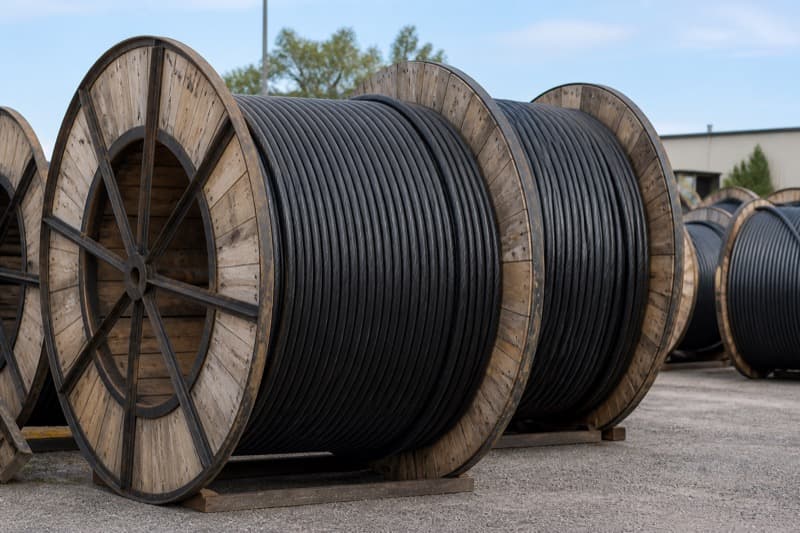
Low voltage power cable covers the 0.6/1kV class used for general power distribution, from switchgear to panel boards to motor feeds. NLS sources copper and aluminum conductor LV cable, PVC or XLPE insulated, single-core and multi-core, to IEC 60502-1 and BS 6004, for industrial, hospital and aviation project wiring across Saudi Arabia.
MV Power Cables
Medium voltage power cable covers the 3.3kV to 33kV range used for substation feeders and primary distribution. NLS sources single-core and three-core XLPE MV cable, copper or aluminum conductor, to IEC 60502-2 and BS 6622, matched to the voltage class, conductor size, and screening a project's single-line diagram specifies.
HV Power Cables
High voltage power cable, 66kV and above up to 150kV XLPE-insulated classes, links grid substations and large transmission-scale loads. NLS sources HV cable to IEC 60840 on a project-specific basis, working from the utility or EPC contractor's technical spec since HV cable is always made to order and never a stock item anywhere in the region.
Flexible Rubber Cables
Flexible rubber cable uses an elastomeric insulation and sheath instead of PVC, built for repeated flexing, mobile equipment, and demanding outdoor or workshop use. NLS sources rubber-sheathed flexible cable to IEC 60245, in single and multi-core, for site power tools, mobile plant, and temporary power runs on Saudi construction and industrial sites.
Solar DC Cables
Solar DC cable connects PV modules to inverters and combiner boxes, built with UV-stable, weather-resistant insulation rated for decades of outdoor exposure. NLS sources single-core solar DC cable to EN 50618, in the common 4mm² to 10mm² sizes utility and rooftop PV projects specify, for solar installations across Saudi Arabia's high-UV, high-heat environment.
Marine & Shipboard Cables
Marine and shipboard cable is built to IEC 60092 for the corrosive, high-vibration, fire-safety-critical environment of vessels, offshore platforms, and port facilities. NLS sources flame-retardant and fire-resistant marine cable in LV and MV classes, for power, control, and instrumentation circuits on marine, port, and offshore infrastructure projects along Saudi Arabia's Red Sea and Gulf coasts.
Guides
Armored Cable Price Guide: What Drives Cost in Saudi Arabia
A breakdown of the real cost drivers behind XLPE armored cable pricing in the Saudi market, from conductor material to import duty, so buyers know what to ask a supplier for an accurate quote.
What It Takes to Be a Saudi Aramco-Ready Cable Supplier
What documentation, traceability, and coordination a cable supplier needs for Saudi Aramco-scale project work, with NLS as a working example.