Actuated Valves
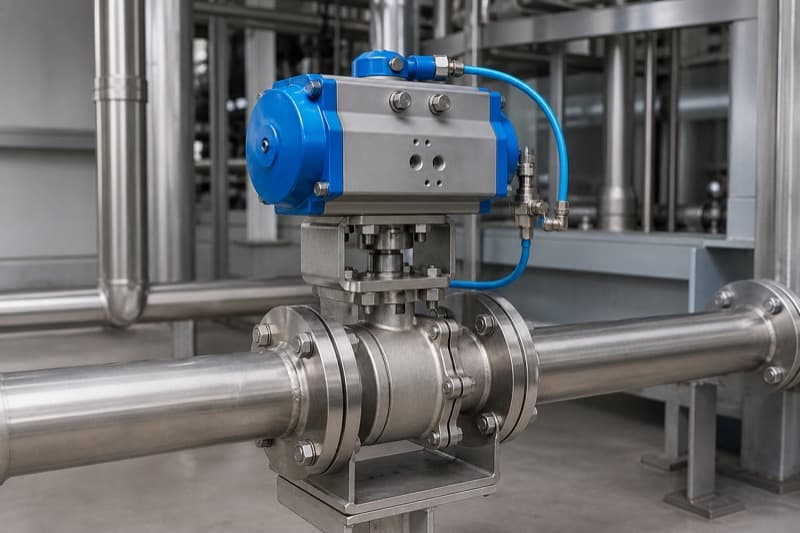
Actuated valves pair a valve body with an electric, pneumatic, or hydraulic actuator for remote or automated operation, replacing manual handwheel operation on valves tied to a control system. NLS sources electric and pneumatic actuated ball, gate, and butterfly valves, on/off and modulating duty, to API 6D and ISA standards, for SCADA and DCS-integrated isolation across Saudi process and utility projects.
An actuated valve is a standard valve body (ball, gate, butterfly, or globe) fitted with an actuator that opens and closes it without a person turning a handwheel on site. Electric actuators run off a motor and gearbox, take a 4-20mA or digital control signal, and suit remote or infrequent-cycle duty. Pneumatic actuators use instrument air against a spring or double-acting piston, cycle faster than electric actuators, and are the standard choice for emergency shutdown (ESD) valves where fail-safe closure on loss of air or signal matters. Hydraulic actuators handle the highest torque duty, usually on large-bore valves where an electric or pneumatic actuator can't generate enough force.
NLS sources actuated ball, gate, and butterfly valves with electric and pneumatic actuation, in on/off (isolation) and modulating (throttling/control) duty, matched to the valve body standard the project specifies (API 6D for pipeline valves, ISA standards for control valve sizing and actuator selection). Actuator sizing has to match valve torque requirements at the design pressure, so NLS works from the valve datasheet or the instrument index rather than a generic size match.
On Saudi projects, actuated valves show up wherever a control system, not a person, needs to operate the valve: SCADA-controlled pipeline block valves, DCS-integrated process isolation, ESD valves on hydrocarbon and utility lines, and remote-operated valves in locations that are difficult or unsafe to access manually, like elevated pipe racks or buried vaults.
Because an actuated valve is really two line items, valve and actuator, matched to each other, NLS's RFQ process asks for the valve datasheet or instrument index entry rather than just a line size and pressure class. That lets NLS quote a valve and actuator pairing in USD with a realistic combined lead time, instead of a valve price that leaves the actuator as an open item.
Specifications
- ✓Actuator types: electric (motor/gearbox), pneumatic (spring-return or double-acting), hydraulic for high-torque duty
- ✓Valve types: ball, gate, and butterfly, on/off and modulating duty
- ✓Control signal: 4-20mA analog, digital fieldbus, or discrete open/close
- ✓Fail-safe options: fail-open, fail-closed, or fail-in-place (pneumatic spring-return)
- ✓Standards referenced: API 6D, ISA actuator and control valve standards
- ✓Typical use: SCADA/DCS-integrated isolation, emergency shutdown (ESD) service
Frequently Asked Questions
What's the difference between electric and pneumatic actuators?+
Electric actuators use a motor and gearbox, cycle more slowly, and suit remote or infrequent operation without a compressed air supply. Pneumatic actuators use instrument air, cycle faster, and are the standard choice for emergency shutdown valves that need fail-safe closure on loss of signal or air.
How does NLS size the actuator for a valve?+
Actuator sizing depends on the valve's required torque at the design pressure, which varies by valve type and size, so NLS works from the valve datasheet or instrument index rather than matching actuators generically to a line size.
What's a fail-safe actuator and when is it needed?+
A fail-safe actuator drives the valve to a predetermined safe position, open or closed, if it loses its control signal or air supply. Emergency shutdown valves on hydrocarbon and utility lines typically require fail-safe actuation as a safety requirement.
Can actuated valves integrate with an existing SCADA or DCS system?+
Yes. Actuated valves take a standard 4-20mA, digital fieldbus, or discrete control signal, matched to whatever protocol the project's SCADA or DCS system already uses, confirmed against the instrument index before ordering.
Who supplies Actuated Valves in Saudi Arabia?+
NLS Industries (Northlane Solutions Company) supplies Actuated Valves across Saudi Arabia, including Riyadh, Jeddah, Dammam and Jubail. Send your specification and quantities to info@northlanesolution.com for a quotation.